Yard Drainage in the Brainerd Lakes Area
A yard that holds water is the most common complaint we hear around the lakes. Brainerd Lakes Dirt Works fixes lot and yard drainage — regrading that moves water off, swales that carry it away, and driveway culverts that let it pass under the drive instead of through it.
Lake country makes the problem worse. Lots sit flat, the water table rides high near shore, and spring melt arrives all at once. Add a driveway built across the natural drainage line and you've got a yard that ponds, a drive that washes, and a low spot that never dries.
The fix is almost never a product. It's shape: give the water a slope to follow and a place to go. Sometimes that's a regrade of the whole yard. Sometimes it's one shallow swale you can mow right over, or a culvert under the drive where the ditch water has been backing up.
We don't sell basement systems — this page is about lot and yard water: the soggy back yard, the ponding by the garage, the driveway that turns into a creek every April.
The visit and the written estimate are free. We walk the lot, find where the water comes from and where it can go, and tell you plain which fix your ground actually needs.
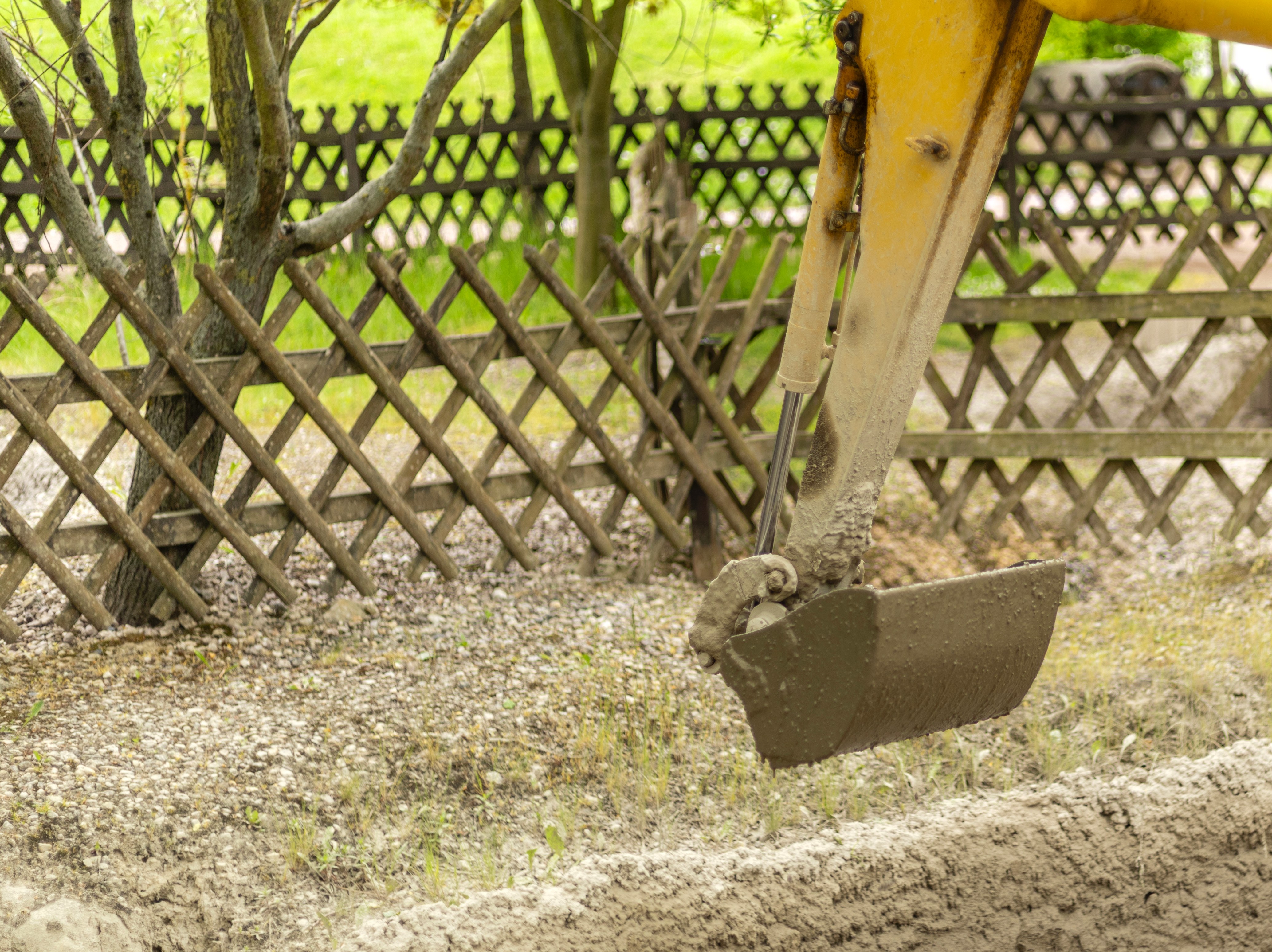
The Three Fixes, in Order
Regrading comes first. If the yard falls toward the house or sits in a bowl, no drain fixes it — the shape has to change. Finish grading after a regrade runs $0.50–$1.25 per sq ft; rough shaping runs $1.00–$2.25. Most yard fixes land inside a $750-floor small-job range up to a few thousand for a full lot.
Swales come second. A swale is a wide, shallow channel graded into the yard that carries water to the ditch or the low corner. It mows like lawn and works like a ditch. Where a yard's water has somewhere to go but no path to get there, a swale is the whole job.
Culverts come third. A driveway that dams the ditch turns the yard into the pond. The right-size culvert, set at the right depth with proper bedding, lets the water pass and keeps the drive dry. Driveway culvert work usually rides along with driveway grading and gravel driveways or a regrade — one visit, both problems gone.
How the Job Runs
We walk the lot wet or dry — if you can show us photos of where it ponds after a rain, even better. We find the high water's source, pick the outlet, and set the plan: regrade, swale, culvert, or a mix. The written estimate names it. On the day we cut, shape, and set, then check the fall across the whole run before we call it done. The grading and drainage page covers the shaping half in more depth.
Will a swale look like a ditch in my yard?
No. A swale is wide and shallow — a gentle dip you mow over, not an open ditch. Most visitors won't notice it. The water notices it, which is the point.
My yard only floods in spring. Still worth fixing?
Spring melt is the honest test of a lot's drainage — if it floods then, the shape is wrong, and every wet year adds ruts and soft spots. Fix the shape once and spring takes care of itself.
Can you set a culvert if the county owns the ditch?
Ditch and right-of-way work can need the county or township's okay, and culvert size is often set by their spec. We flag it when we see it and set the culvert to the spec you're given.
Yard holding water? Call (612) 260-8779 — we'll find where it wants to go and grade it a way there.